
Sanxia Workwear Highlights Key Factors in Choosing OEM Uniform Manufacturers for Medical, Food, and Cleanroom Industries in 2026
Just another WordPress site
Press Release Disclaimer: This is a press release distributed through the XPR Media network. It has not been independently verified by our newsroom.

Chengdu, Sichuan, China – November 18, 2026
Choosing an OEM workwear manufacturer is not simply a matter of comparing unit prices. The supplier must translate your requirements into garments that fit consistently, work in the intended environment and can be reordered without unexpected changes. For international buyers, design support, realistic minimum order quantities, sampling, quality checks and shipment planning all affect the result.
Whether you are developing a private-label medical scrub line or sourcing uniforms for a food processing facility, start by defining the application and the buying process. A manufacturer with both product-development experience and industry-specific garment options can make those decisions easier.
What Should Buyers Look for in an OEM Workwear Manufacturer?
A useful supplier evaluation begins with five questions: Can the manufacturer make the garment your team needs? Can it help finalize the design and fabric? Will you receive a sample before production? How will quality be checked? And can it meet your order size and delivery requirements?
A low quotation has limited value if the fabric specification is vague, the size chart is unsuitable or the production sample differs from the bulk order. Ask for a written specification covering fabric, dimensions, logo position, construction, packaging and inspection expectations before approving a purchase.
Match the Uniform to the Working Environment
There is no single fabric or garment design that suits every workplace. A hospital, food factory and electronics cleanroom may all require practical uniforms, but the risks and routines are different.
Application | Common garment needs | What to confirm before ordering
Healthcare and clinics | Comfortable scrub sets, lab coats and department-specific colors | Fit, movement, wash care, pockets and size consistency
Food processing | Coats, coveralls, caps, aprons and suitable footwear | Hygiene procedures, garment closures, laundering and site requirements
Pharmaceutical and cleanroom work | Controlled garment designs for designated areas | Facility protocols, particle-control requirements, fabric performance and supporting tests
Electronics and ESD-sensitive work | Anti-static workwear and related accessories | Applicable ESD specifications and test evidence for the selected garment
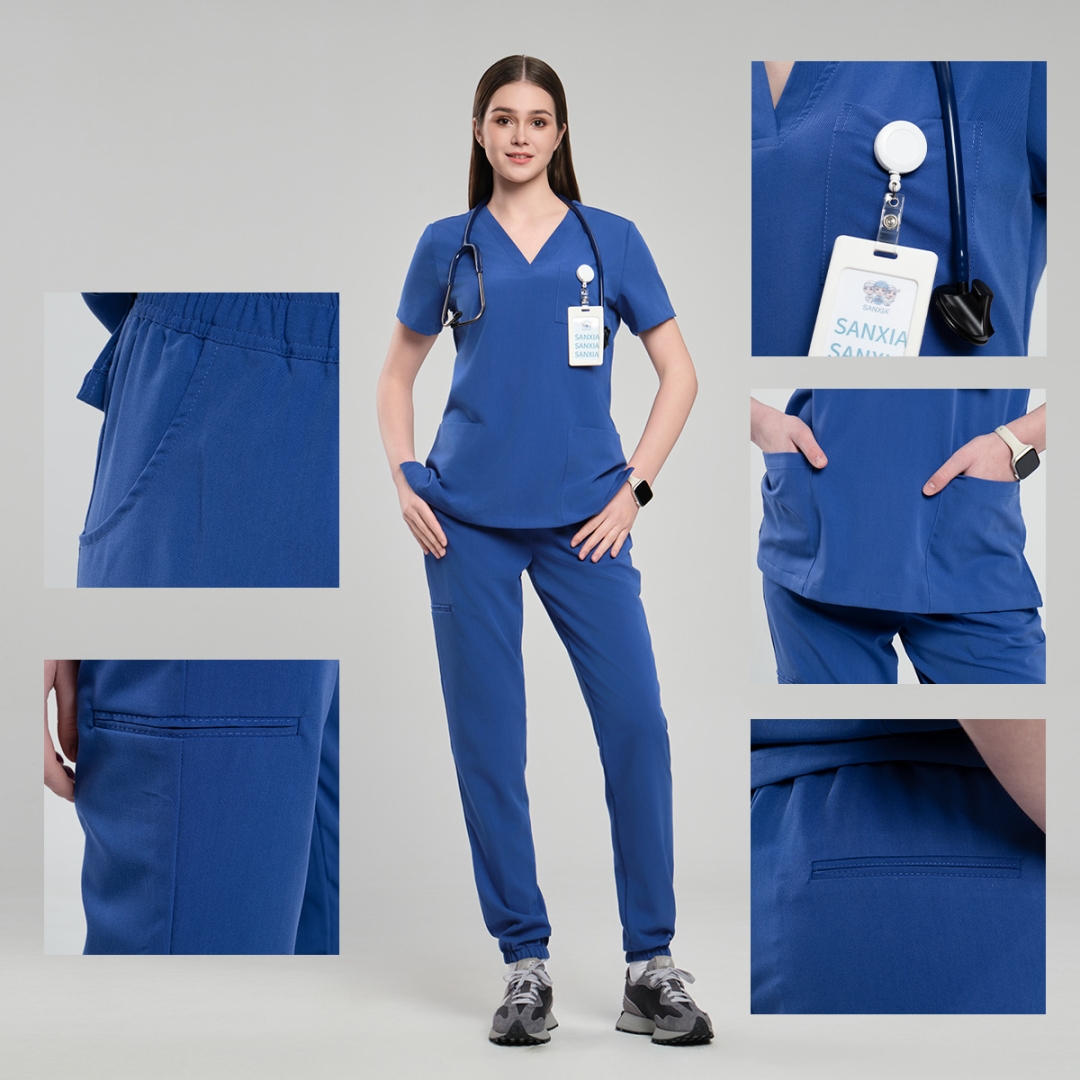
For healthcare purchasers, explore medical uniforms such as scrub tops, pants, sets and lab coats. For production facilities, food factory uniforms include options such as coveralls, aprons and work caps. Buyers working around sensitive electronic components can review ESD and anti-static workwear.
Workwear selection should support a facility’s hygiene or safety program, not replace it. Ask for product-specific documentation when compliance, protective performance or cleanroom compatibility matters; a general product description is not proof of certification.
OEM or ODM: Which Manufacturing Model Fits Your Project?
OEM workwear manufacturing is usually the better fit when a buyer already has a design, reference sample or detailed specifications. The manufacturer helps refine materials, sizing and construction, then produces the approved garment.
ODM workwear development fits buyers who need more help turning a product idea into a defined uniform. The process may involve garment design, patterns, fabric selection and sample testing before the specifications are finalized.
SANXIA WORKWEAR supports both arrangements. Its OEM service scope includes medical, food-industry, pharmaceutical and cleanroom garments, while its design team can develop drawings and samples from client requirements. Buyers should clarify ownership of designs, approval responsibilities and permitted revisions in their agreement.
From First Brief to Approved Production Sample
1. Define the Brief Before Discussing Price
Tell the manufacturer who will wear the garment, under what conditions, and how often it will be cleaned. Include the target market, garment quantities, color range, size distribution, branding method and expected shipment date. For workplace programs, explain any department identification, restricted trims or site-specific dress rules.
2. Confirm Fabric, Fit and Branding
Fabric selection affects comfort, durability, maintenance and suitability for the intended workplace. Request swatches where appropriate, and confirm composition, weight, color and care requirements. For repeat orders, ask how fabric and color consistency will be managed.
Branding may involve embroidery, screen printing, heat transfer, woven labels or care labels. SANXIA offers these customization methods, along with garment design and technical specification support. Logo appearance should be checked on the actual fabric, especially when placements cross seams, pockets or high-stretch areas.
3. Review a Physical Sample
Design drawings cannot reveal everything about sleeve movement, trouser fit, stitch quality or how a logo sits on the finished garment. Review the sample against your specification. Record any revisions and approve the final version before bulk cutting begins.
The OEM production process covers requirement confirmation, design, cutting, sewing, inspection and delivery. Use the approved sample and written measurements as reference points for later production checks.
How Do MOQ and Sampling Affect a Custom Workwear Order?
Minimum order quantity matters to new brands, regional distributors and organizations testing a new uniform program. SANXIA lists a 100-set MOQ, with its standard FAQ configuration describing one style, one color and four sizes per 100 sets. Buyers needing several departments, additional colors or specialized materials should confirm how those variations affect their quotation.
Samples are generally prepared within 7–15 working days, according to SANXIA’s published FAQ; custom design or logo work can require more time. Samples are not normally free, although the company states that sample fees can be refunded on qualifying bulk orders of 500 sets or more.
These figures are planning inputs, not a guaranteed lead time for every design. Before ordering, request separate estimates for sampling, revisions, bulk manufacturing and transport.
Quality Control Should Cover More Than the Final Appearance
Uniform procurement is especially sensitive to variation. If one batch has tighter sleeves, a different shade of blue or a poorly positioned label, the problem becomes visible across an entire team. Quality checks should therefore begin with agreed specifications and continue through production.
SANXIA describes controls covering material selection, cutting, sewing, finished-garment inspection and packaging. For a buyer, practical acceptance criteria can include measurements by size, seam workmanship, logo placement, labeling accuracy and correct quantities per carton.
For food, pharmaceutical or ESD-related orders, discuss the required performance evidence separately. A fabric test report, finished-garment assessment and facility approval answer different questions. Do not assume that a garment satisfies every local rule simply because it is marketed for a particular industry.
What Should International Buyers Check Before Shipping?
Overseas sourcing adds coordination tasks beyond manufacturing. Confirm the delivery address, packaging format, labeling language, shipping terms, documentation responsibilities and who approves the final packing list. Ask whether the schedule accounts for the destination market and the chosen freight method.
SANXIA has supplied customers in Japan, South Korea, Europe, North America and the Middle East. Its international service model combines design communication, sample development, manufacturing and shipment coordination. Those capabilities are relevant to distributors managing launches and employers standardizing uniforms across locations, but the actual production and transit dates should still be agreed per order.
For ongoing programs, also plan reorders. Retain the approved size chart, fabric specification, color reference, labeling requirements and sample records so subsequent purchases can be compared with the original order.
Why Consider SANXIA WORKWEAR for Custom Uniform Sourcing?
Established in 2013, SANXIA WORKWEAR is part of Chengdu Sanxia Technology Co., Ltd. It has served more than 10,000 customers and offers a product range across healthcare, food processing, pharmaceutical environments and anti-static applications. Its team supports garment drawings, fabric recommendations, samples, logo customization and bulk production.
For an overseas buyer, the practical benefit is having design and production discussions connected rather than handled as unrelated transactions. A distributor can begin with an approved scrub style; a food plant can specify garment details around its hygiene procedures; and an electronics buyer can request appropriate anti-static options and supporting information.
Frequently Asked Questions
Can I order custom uniforms with my own logo?
Yes. SANXIA offers several logo and label options, including embroidery, printing, heat transfer and woven labels. Confirm artwork, placement, application method and any setup charges before sample approval.
Is a 100-set order suitable for multiple styles?
The published standard MOQ is 100 sets for one style with specified color and size arrangements. Multiple styles or unusual fabric requirements may change the minimum, so request a project-specific quotation rather than assuming all variations fit the standard MOQ.
Can one supplier provide uniforms for different industries?
Yes, if the supplier has the appropriate product range and can document the requirements of each order. SANXIA offers medical, food factory and ESD garments, but buyers should verify performance and compliance separately for each application.
Start Your Custom Workwear Project with a Clear Specification
To obtain a useful quotation, send your garment type, target industry, reference images or drawings, fabric preferences, size chart, quantity by style and color, logo artwork, packaging needs and destination market. If the project involves protective or controlled-environment clothing, include the applicable technical requirements.
Explore SANXIA’s custom workwear products or contact the team to discuss design support, samples and a production plan matched to your project.
About Us
Founded in 2013 and headquartered in Chengdu, Sichuan Province, Chengdu Sanxia Technology Co., Ltd. is a high-tech enterprise integrating R&D, production, warehousing, and sales. The company specializes in the development and manufacturing of protective clothing, protective footwear, protective headwear, and related supporting products.
Media Contact
Company Name: Chengdu Sanxia Technology Co., Ltd.
Contact Person: Media Relations
Email: Send Email
Country: China
Website: https://www.sxuniform.com/
Press Release Distributed by ABNewswire.com
To view the original version on ABNewswire visit: Sanxia Workwear Highlights Key Factors in Choosing OEM Uniform Manufacturers for Medical, Food, and Cleanroom Industries in 2026


