
Communication Boards in Your Community: How These Low-Tech, High-Visibility Tools Are a Powerful Force for Awareness and Connection
ROCKVILLE, Md., Oct. 1, 2026
Press Release Disclaimer: This is a press release distributed through the XPR Media network. It has not been independently verified by our newsroom.

Communication Boards in Your Community: How These Low-Tech, High-Visibility Tools Are a Powerful Force for Awareness and Connection
PR Newswire
ROCKVILLE, Md., Oct. 1, 2026
ASHA Shares Information for October’s AAC Awareness Month
ROCKVILLE, Md., Oct. 1, 2026 /PRNewswire/ — For this year’s AAC Awareness Month (October), the American-Speech-Language-Hearing Association (ASHA) is spotlighting the importance of communication boards in public spaces.
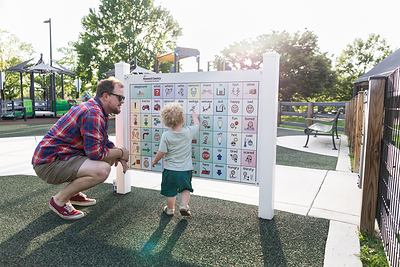
Communication boards—one example of augmentative and alternative communication (AAC)—typically are large displays that include pictures of a dozen or more common vocabulary words that people might use in a public space such as a library or park. Such words might include slide, go, hi, play, bathroom, or book. They are useful for people of all ages who have limited or unreliable speech—these boards allow them to communicate with others and vice versa.
The theme for this year’s AAC Awareness Month is AAC in Everyday Life: Today, Tomorrow, and Beyond. The presence of communication boards is one of the more visible ways that people may experience AAC in their communities. In the United States, more than 2 million people use AAC to communicate. AAC takes many forms—from gestures and facial expressions, to picture- or text-based boards, to high-tech tools like tablets and speech-generating devices.
What is the benefit of putting large communication boards in public spaces?
Communication boards can help people of all ages share their wants, needs, and feelings in public areas. Although many people who use AAC as their primary means of communication may have individual communication boards or other personal AAC systems, large public communication boards can help to improve awareness of AAC in the greater community—and help everyone practice using it.
You may see portable communication boards in public as well—in locations like a stadium or a concert hall. These portable boards can serve as a temporary backup if the person’s primary AAC device is charging or if the AAC user needs faster access to vocabulary related to that particular place.
Anyone can benefit from having access to a communication board in public—even if they don’t have a communication or other disorder that affects their speech. For example, young children who are still learning to speak can often recognize and point to pictures before they can verbalize what they want. An adult who loses their voice temporarily can impart an urgent need in public if a board is available.
Why are these boards becoming more common?
The increasing presence of communication boards in public spaces reflects a growing need for the public to learn about AAC, which is commonly used by individuals who have a variety of conditions including but not limited to
- apraxia of speech,
- aphasia,
- autism,
- cerebral palsy,
- developmental delays, and
- rare genetic conditions.
It also reflects an increasing desire for communities to be more inclusive to all populations.
“Public communication boards can help bridge gaps in understanding between people who have communication challenges and others in their communities,” says ASHA 2026 President Linda I. Rosa-Lugo, EdD, CCC-SLP, ASHA Fellow. “Communication is a two-way street, and we all bear responsibility for doing our part to have successful interactions.”
What are some tips for using a communication board?
If you’re interacting with someone who wants to use a communication board, use these strategies to help improve communication success:
- Point as you speak. When you say a word that’s on the board, point to it—this connects pictures to spoken words.
- Give the person plenty of time. Allow extra time for your communication partner to look at the board—and even more time for them to choose a word.
- Keep at it. Stay consistent, especially when the other person uses the board. Communication with AAC takes time—and that’s OK!
- Position yourself well. Stand to the side of the board so both people can see the full display and have access to all the options. If you have a phone, take a picture of the board to use as you move around the building or playground.
- Offer choices if needed. Ask, “Are you thinking about this?” and point to words, one by one, watching for their response.
To learn more about AAC and communication disorders, visit www.helpingyoucommunicate.org.
About the American Speech-Language-Hearing Association (ASHA)
ASHA is the national professional, scientific, and credentialing association for 247,000 members, certificate holders, and affiliates who are audiologists; speech-language pathologists; speech, language, and hearing scientists; audiology and speech-language pathology assistants; and students. Audiologists specialize in preventing and assessing hearing and balance disorders as well as providing audiologic treatment, including hearing aids. Speech-language pathologists (SLPs) identify, assess, and treat speech, language, and swallowing disorders. www.asha.org
CONTACT:
Francine Pierson
301-296-8715
fpierson@asha.org
 View original content to download multimedia:https://www.prnewswire.com/news-releases/communication-boards-in-your-community-how-these-low-tech-high-visibility-tools-are-a-powerful-force-for-awareness-and-connection-302896248.html
SOURCE American Speech-Language-Hearing Association (ASHA)


